
If you’ve spent any time searching for a home near the water in Sydney, you already know what happens next. The listing looks perfect with three bedrooms, close to the beach and good schools nearby. Then you see the price guide... and you quietly close the tab.
It happens to a lot of people. Young families who want space to grow. Down-sizers who’ve done their time in the suburbs and are ready for a quieter lifestyle. First home buyers who’ve saved hard but keep finding the goalposts moving. The question a growing number of Sydneysiders are asking is a reasonable one; does buying coastal property have to mean compromising everything else?
On the Central Coast of NSW, the answer is no.
What Sydney’s Coastal Suburbs Actually Cost
Let’s look at the numbers, because they tell a clear story.
In Manly on the Northern Beaches, the median house price currently sits at around $4.3 million. Bondi in the Eastern Suburbs is in similar territory at roughly $4.4 million. Coogee, another Eastern Suburbs favourite, is around $4.3 million. Even Cronulla, often cited as Sydney’s more affordable coastal option, has a median house price of approximately $3.4 million.
These are significant numbers and for most buyers, they represent not just a stretch, but a wall.
Now compare that to what the Central Coast offers. Median house prices across the region range broadly from the high $800,000s in suburbs like Killarney Vale through to around $1.1 to $1.2 million in family favourites like Kincumber and up to $1.7 million in premium beachside suburbs like Avoca Beach. Even at the higher end of the Central Coast market, you’re looking at less than half of what you’d pay for an equivalent home in Manly or Bondi.
That gap doesn’t just represent money saved. It represents a different kind of life that suddenly becomes possible.
The Same Coastal Life, at a Different Price Point
There’s a narrative that persists about regional coastal living in Australia and it goes something like this; yes, it’s affordable, but you’re trading off on lifestyle. You give up the cafes, the schools, the energy and the proximity to work.
The Central Coast challenges that narrative.
Beaches, Bush and Open Space
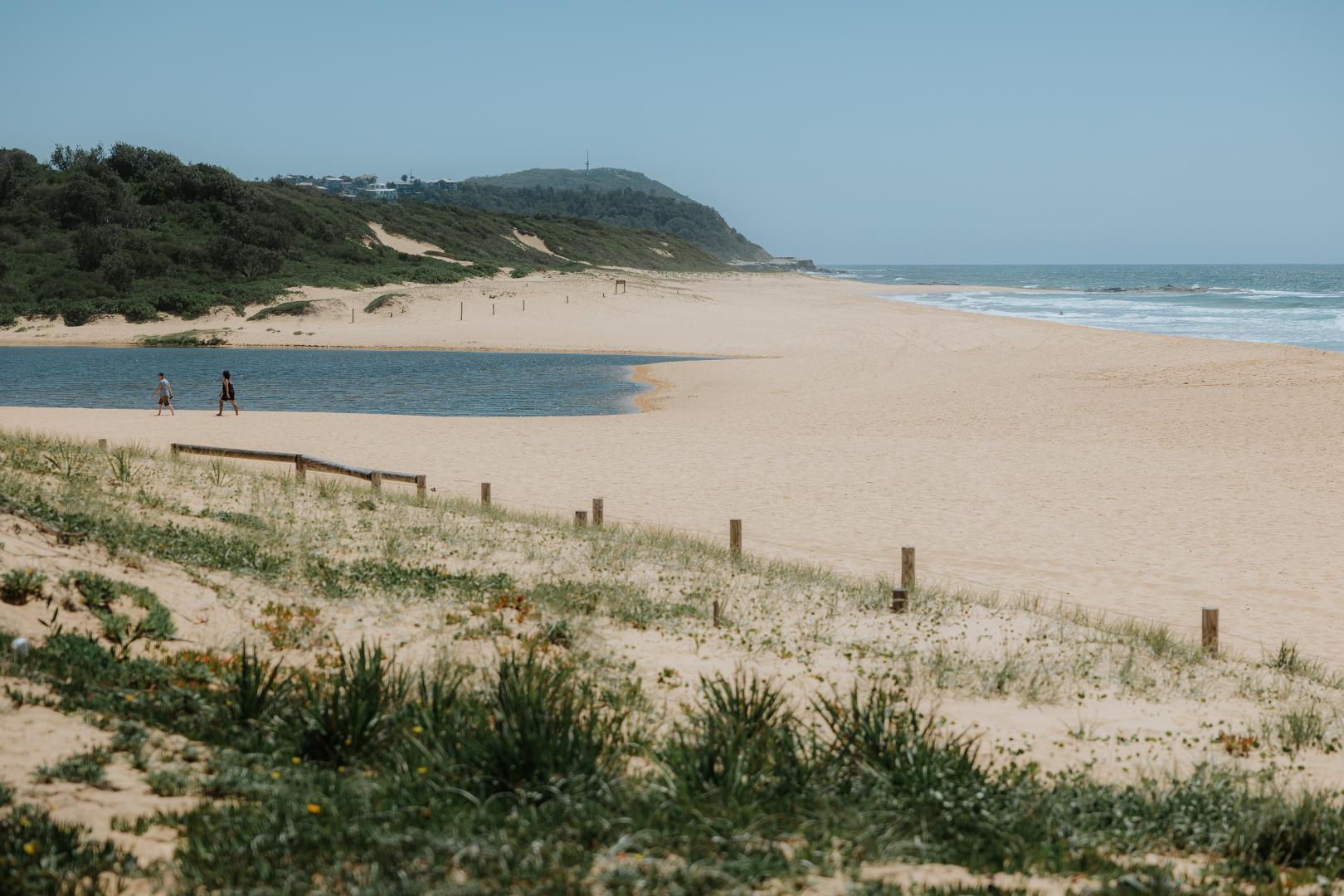
The coastline here is genuinely world-class. Terrigal, Avoca Beach, Copacabana, MacMasters Beach and The Entrance are among the most beautiful beaches in NSW. They’re not crowded in the way Bondi is on a summer Saturday. You actually get to use them. There are surf lifesaving clubs, long stretches of sand and a beach community rather than a tourist attraction.
Beyond the beaches, the region is wrapped by national parks and natural reserves. Brisbane Water National Park and Bouddi National Park offer kilometres of walking trails, kayaking waterways and scenery that would cost you a significant premium to live near in Sydney. For families with kids or retirees who want to be outdoors, this kind of access to nature is not a compromise. It’s an upgrade.
A Cafe Culture That’s Come Into Its Own
The Central Coast has changed significantly. The region that older Sydneysiders might remember as a quiet holiday destination has developed a genuinely vibrant food and hospitality scene. Terrigal’s Esplanade, the weekend food scene at The Galleria markets in Ettalong Beach, the cafe culture in Long Jetty and the coffee and brunch scene across suburbs from Gosford to Kincumber reflect a region that’s grown and changed with the evolving communities.
Schools Worth Noting
Schooling is often the first conversation families have when considering a move. It’s a fair concern and the Central Coast holds up well under scrutiny.
The region has a strong mix of public and independent schools, with several highly regarded options across different areas. Schools including The Entrance High School, Gosford High School (a selective school) and a number of well-regarded Catholic and independent schools give families genuine choice. Kincumber and its surrounding suburbs are particularly in high demand for young families, with one of the biggest draws being the nearby schooling options.
For parents, the practical reality is that you can access quality education on the Central Coast without having to choose between a school catchment and a home you can actually afford.
The Commute: A Realistic Conversation
It would be dishonest to suggest that distance doesn’t matter. The Central Coast sits roughly 90 minutes by train from Sydney’s CBD and around 75 to 90 minutes by car depending on traffic. That’s a commitment.
But for a growing number of people, it’s a commitment they’re making deliberately, not reluctantly. The shift toward flexible and hybrid working arrangements that accelerated through the pandemic has stuck around in meaningful ways. Two or three days in the office rather than five changes the maths on commuting considerably. What felt impossible becomes workable. And what you gain at the other end, in space, in lifestyle, in what your money buys, starts to feel like a fair trade.
Gosford station connects directly to the T1 North Shore line and Central Coast services run regularly through peak periods. For those who drive, the M1 connects the region to Sydney and ongoing infrastructure investment has improved travel times from several parts of the Coast.
It’s worth having an honest conversation about what your particular commute would look like before making any decisions. But the assumption that working in Sydney and living on the Central Coast is impractical is one that thousands of people are quietly disproving every day.
Who’s Making the Move
The people choosing the Central Coast aren’t making a compromise. They’re making a considered decision, and the three groups who tend to find it most compelling are worth understanding.
Young families are often drawn by the combination of space, schools and affordability. A budget that buys a two-bedroom apartment in Bondi can buy a four-bedroom house with a garden on the Central Coast. That’s not a small difference. For families thinking about how they want to raise children, it’s often a transformative one.
Down-sizers frequently find the Central Coast offers what they’ve been looking for but haven’t been able to justify paying for. Selling a home in the inner suburbs or established areas of Sydney can free up significant capital when you buy on the Coast, improving your financial position while gaining the lifestyle you actually want to be living.
First home buyers are finding that the Coast represents one of the more realistic entry points to the NSW coastal property market. Suburbs in the $800,000 to $1.1 million range exist here. They’re not abundant, and they require strategic buying to secure well, but they exist. In comparable coastal Sydney suburbs that price point was effectively erased years ago.
A Note on How We Can Help
If you’re thinking seriously about buying on the Central Coast, whether you’re still in the early stages of figuring out whether it’s right for you, or you’re ready to move and want to make sure you get it right, having someone in your corner who knows this market well makes a real difference.
At Bryson Buyers Agents, the Central Coast is what we do. We know which suburbs are genuinely growing and why. We know the schools, the commutes, the streets, the pockets within pockets that don’t always show up in a property search. We have access to off-market properties that never reach the open market, which is an upper hand in a region where good stock moves quickly and competition is real.
We’re not here to push you into a decision. We’re here to make sure that if you do buy on the Central Coast, you buy the right property, in the right place, at the right price.
If you’d like to have a conversation about what’s possible, reach out to us.
Want to learn more about the Central Coast High Schools making headlines? Read more about what it means if you’re thinking of making the move here.